
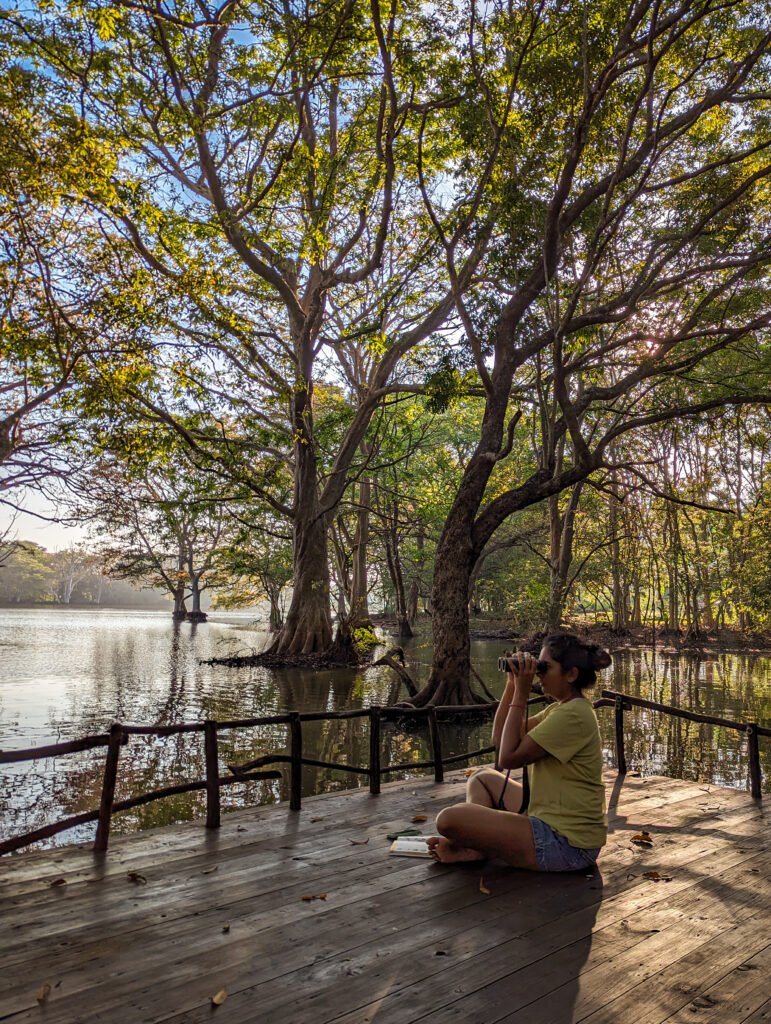
Birdwatching is not only about what you see. It is also about how you choose to observe wildlife.
This is a personal reflection on birding in Sri Lanka, wildlife ethics, and why patience matters far more than a checklist.
How I fell in love with birding
Birdwatching has been a way of life for me. I grew up with it. My mother was a birdwatcher, and I started birding while she pushed me on a stroller down tank bunds as a toddler. I still recall the excitement of spotting a Woolly-necked Stork. “Woolly, woolly!” I screamed as a four-year-old near Sigiriya. I remember freezing when I spotted an endemic Crimson-fronted Barbet when I was five in Thalawa, and an elusive Black-capped Kingfisher near Mavil Aru when I was seven.
Birdwatching and travelling went hand in hand for my family. We loved to travel, and whenever we travelled, we watched birds. The perfect holiday.
I was introduced to birding the old-school way. Before it was hip. Before apps took over. Before the Instagram frenzy.
Birdwatching, to me, is being with my family in silence, in our garden, in the jungle, in forest patches, in paddy fields, you name it. Birdwatching was a family affair. Four of us. Four bird guides. Four binoculars. Four pairs of eager eyes.
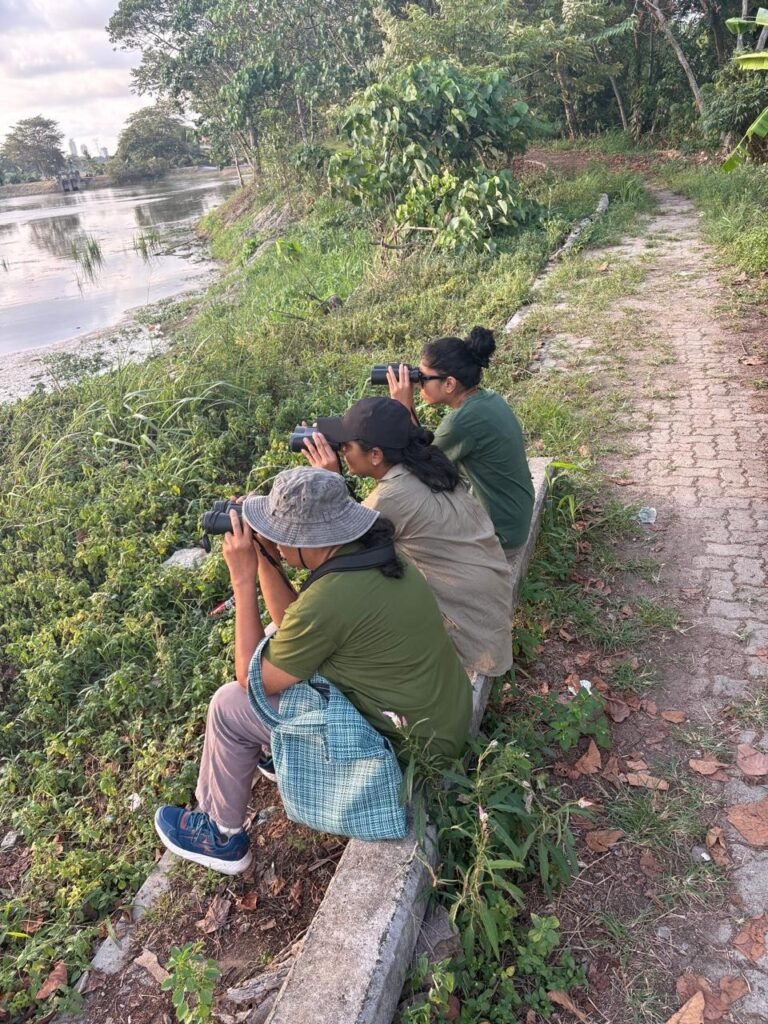
That is how we spent our mornings on holiday, sipping a cup of tea while scanning the trees. Or how we enjoyed afternoon tea by a forest bungalow, a forest patch, or a small seasonal tank. We did not carry cameras. Our eyes did the hard work, teamwork did the rest.
We knew how to identify birds from their calls, through years of practice. Two of us would watch the bird while the other two frantically flipped through a first-edition copy of Henry’s Guide to the Birds of Ceylon and whichever newer guides were available. Between the four of us, there was rarely a bird we could not identify.
We would watch them for hours, observing how they fed, moved, called, and hid. We were bird stalkers. Hours would pass and we would not realise until it was either too dark to see the birds or the elephants were too close and we had to give way.
When we planned holidays, it was never around a bird checklist. Holidays were planned around a location, for its history, art, and culture. Birding was always possible because birdwatching for us was never about a checklist. It was about appreciation.
What was meant to be was meant to be.
We never went searching for a particular bird. The thrill was spotting what nature presented to you and watching it for as long as possible without disturbing it. The key was being one with nature.
This, to me, is the epitome of slow travel.
Growing up, I was almost guaranteed to have the weirdest hobby among my classmates. Birdwatching was not exactly a hobby many young girls in Colombo had. It was rare, and I rejoiced in it. There was no competition. No one telling me what I was doing was wrong. After all, a hobby is meant to be relaxing.
That said, I did take the liberty of converting anyone and everyone around me into birdwatchers. My friends would vouch for it. There was no way out. Friends, colleagues, random strangers who crossed paths with me while I was carrying a bird book, I made sure to try and convert them. I built a cult, and quite a strong one.
And now birding has become the hobby of millennials. Everyone, young and old, is a birder. One would think this is great, until…
What I saw in Nilgala
I recently visited Nilgala for the first time. Nilgala’s forests are home to birds that are highly localised. People travel there specifically to see them. I waited nearly thirty years to visit, because for me it was never about the checklist.
What I saw there disturbed me deeply.
Birdwatchers, photographers, wildlife enthusiasts, guides, and trackers, all using JBL speakers. Even tools like Merlin, designed to help identify birds, were being misused to lure birds out.
Two jeeps stood on either side of the road, repeatedly playing calls of Nilgala’s jewel, the Painted Francolin. At a distance, the bird ran across the road from one side to the other, clearly startled. Jeeps full of wildlife enthusiasts and photographers snapped away at the distressed bird, gleaming smiles, high-fives, the works, and this continued across the park. There were only two rare bird sightings without the use of call playback. Just two. Every other sighting was assisted by playback and Bluetooth speakers. Bush quail, Racket-tailed Drongo, nothing was spared.
It did not start or stop at Nilgala. This is what the majority of wildlife enthusiasts do. Some use calls, others hold birds in their hands because they are “experts”, going against the very science they claim to practise. Any bird in human hands is stressed. Holding birds up for others to admire is not birdwatching. You may be trained to handle birds, but that does not make it right to abuse that privilege outside research.
This is what birdwatching has become.
The downside of turning a slow hobby into a trend. The reality behind many prized wildlife photographs.
This is not birdwatching. This is not ethical wildlife tourism. This is not appreciation. This is stressing an animal, altering its behaviour, and treating it as though it exists for your convenience.
People will rush to defend the practice.
“I didn’t know.”
“It was just this once.”
“I was with an expert.”
“People have expectations.”
“There isn’t another way to see the Painted Francolin.”
But that is exactly the point.
People have spotted birds ethically long before call playback became normalised. Birdwatching is not about getting lucky once or hiding behind an expert. It is about intentionally slowing down, practising patience, and visiting and revisiting a site until it reveals itself to you.
Nilgala is indigenous land. Its inhabitants, both human and wild, deserve respect.
It gave me immense joy to realise I was brought up well. That the birding I cherished was a rare form, one that now feels like it is going extinct, almost as fast as the birds it focuses on.
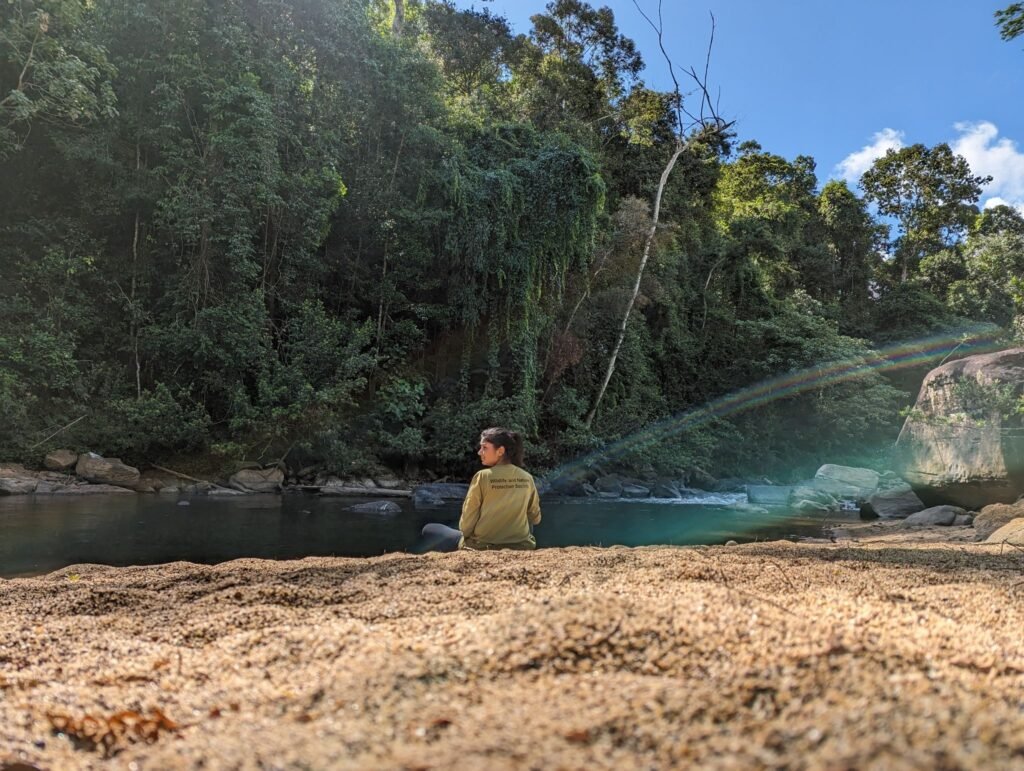
Birding in Sri Lanka, the TCE way
This is the opposite of what we practise at TCE. At TCE, we birdwatch the way my grandfather taught my mother, and the way my mother taught me.
Slowly. With time. Without expectations. In its natural habitat. We only work with guides and naturalists who prioritise bird welfare over sightings.
This is why, thirty years into birding, I still spot lifers on this little island. I still enjoy watching birds I have seen before, because my love for birds never came from wanting a photograph or adding another bird to a checklist. It came from genuine curiosity, from wanting to understand how these curious creatures behave.
Sri Lanka boasts remarkable bird diversity. The island has high endemism. Migratory birds make this island their temporary home to escape harsh winters, and our resident birds differ dramatically from the coast to the highlands to the arid north.
Birdwatching came to my mother from her father, and somehow became a gift passed down to me by a grandfather I never had the privilege of meeting. And what a gift it has been.
If birdwatching has taught me anything, it is this: the best sightings rarely come to those in a hurry.
Curious enough to bird differently? Let’s start a conversation.
1 thought on “What birdwatching taught me about slow travel in Sri Lanka”
Im also an old school birder, there for Im 100% agree with this. But everybody has there own stories.